




Evolution of permeability and porosity due to mineral precipitation in natural and/or artificial granite fractures
Introduction
Deep Geothermal Energy is expected to meet 7% of the national electricity supply in the Swiss Energy Strategy 2050. In Switzerland, Enhanced/Engineered Geothermal Systems (EGS) are commonly considered the only option for deep geothermal electricity production. For example, the next planned geothermal power plant site in Switzerland, Haute-Sorne, is an EGS project. Previous studies (e.g., Randolph and Saar, 2011a; 2011b) have shown that using carbon dioxide (CO2) instead of water as the subsurface working fluid in EGS has many benefits. However, injection of dry, supercritical CO2 into brine aquifers has the potential to dry out saline formation fluid, leading to salt precipitation. This can significantly impair CO2 injection/circulation rates in CO2-based EGS.
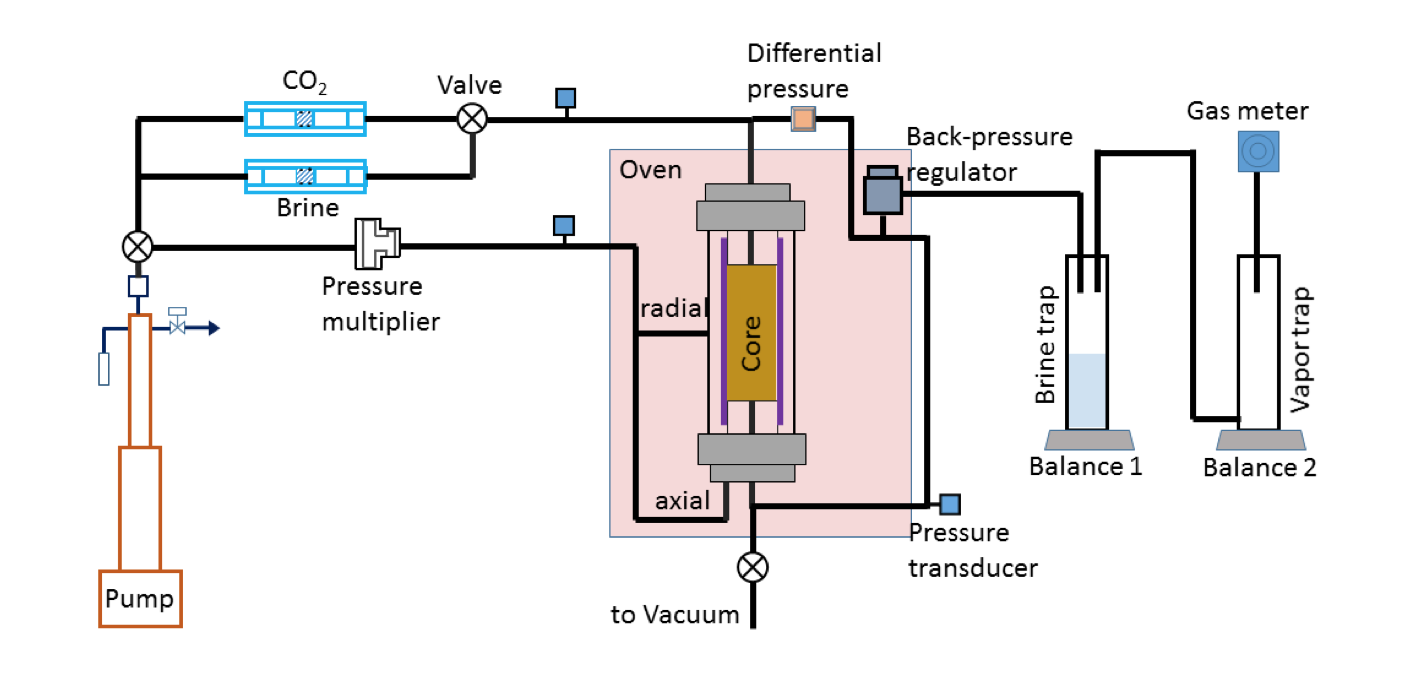
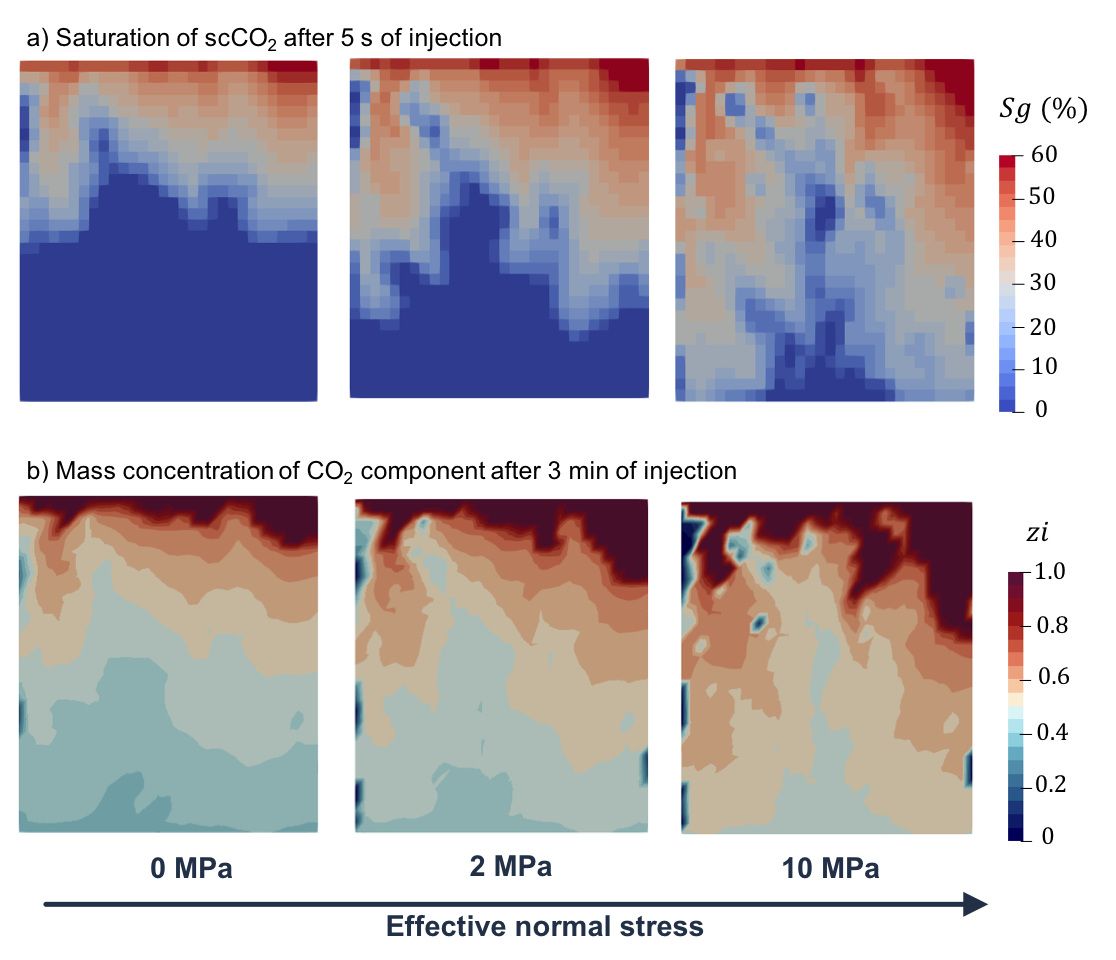
The proposed study would investigate precisely the above-described mechanisms in laboratory experiments. Specifically, we will investigate salt precipitation in natural and/or artificial fractures in granite, in order to understand the mechanisms that govern porosity and permeability changes that result from such pore-space modifications due to salt precipitation. By employing reactive flow-through experiments within an X-ray transparent pressure vessel, we can register the depositional patterns of precipitated salt after long-term flooding of dry, supercritical CO2 into brine-saturated fractured granite cores using X-Ray Computed Tomography. We will determine the porosity/permeability of the fractured granite cores before and after these experiments using a transient pressure-decay method. We may also quantify precipitation of salt with a Scanning Electron Microscope. Four control parameters will be investigated: 1) initial brine salinity, 2) effective stress, 3) CO2 flooding rate, and 4) fracture and pore-space geometry. These experimental observations will serve as calibration examples for the development of a numerical fluid flow and fluid-mineral reaction simulator, a critical step towards simulating and understanding the long-term behavior of geologic reservoirs.
geophysics