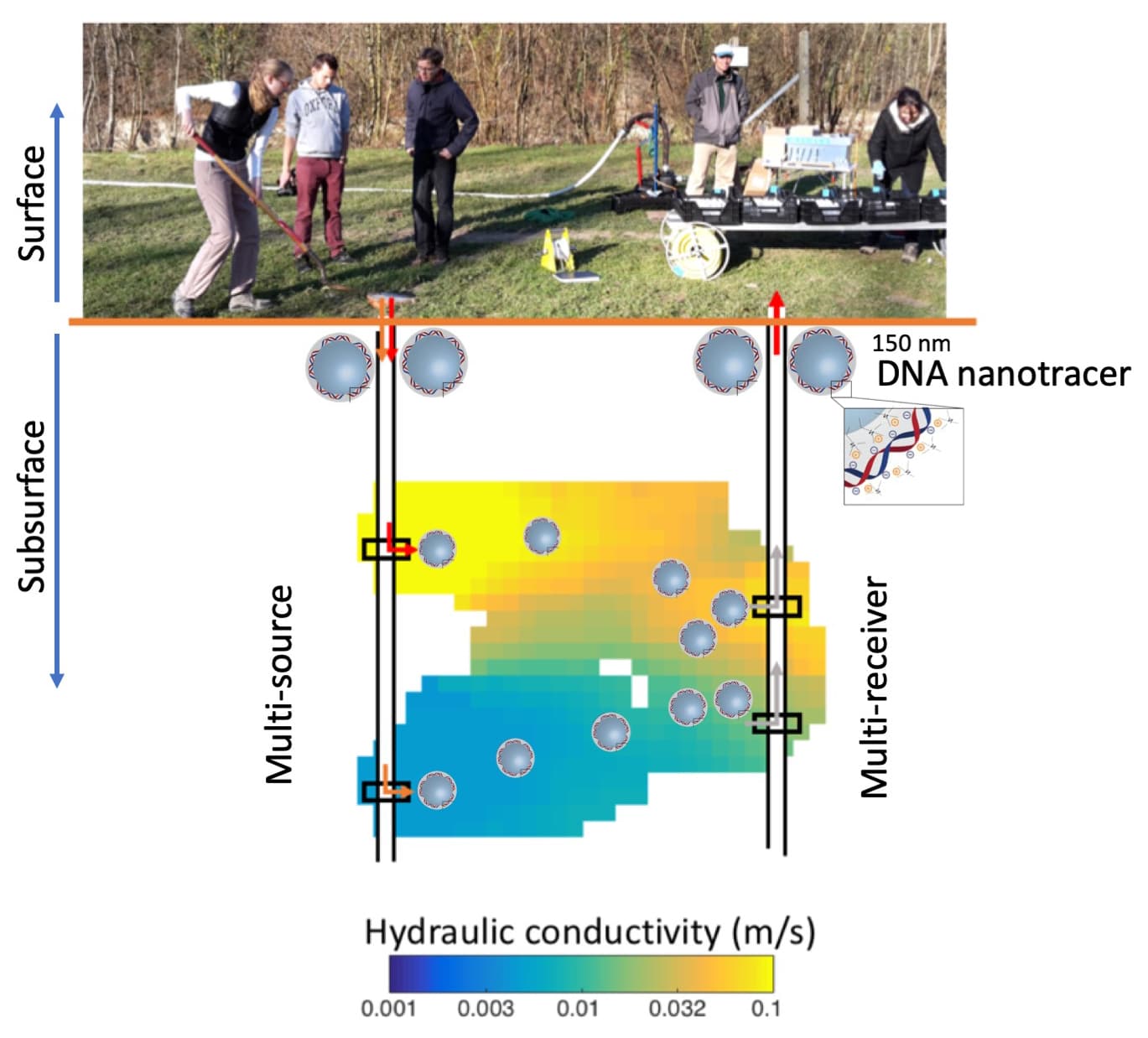


With the goal of evaluating their transport properties and suitability as tracers, we have conducted column and field experiments in porous media. In column experiments, we used DNA nanotracers modified in size together with a classical fluorescent solute uranine, and we could observe faster average transport velocity, lower mass recovery, and smaller swept volume as the particle size was increased.
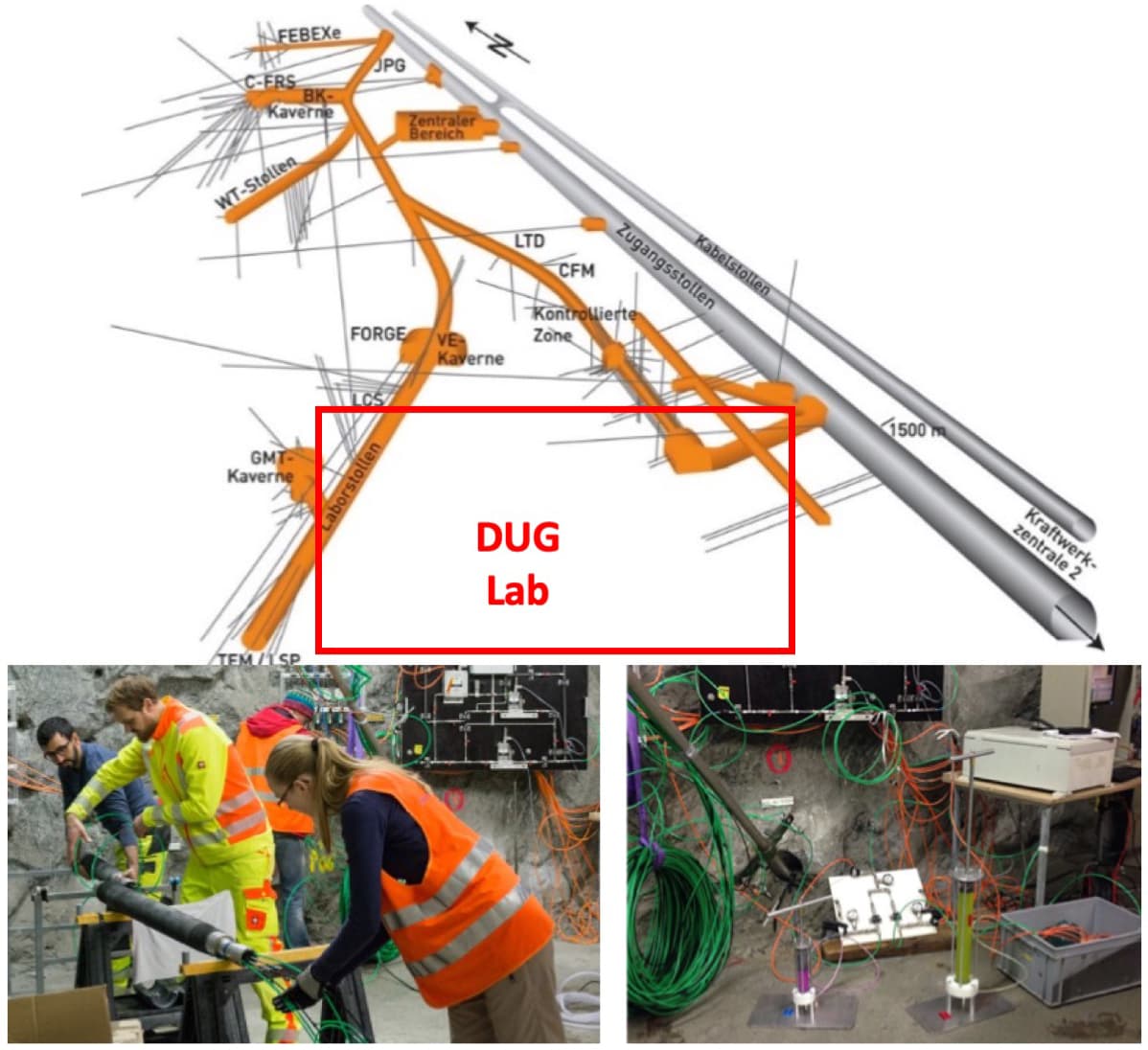
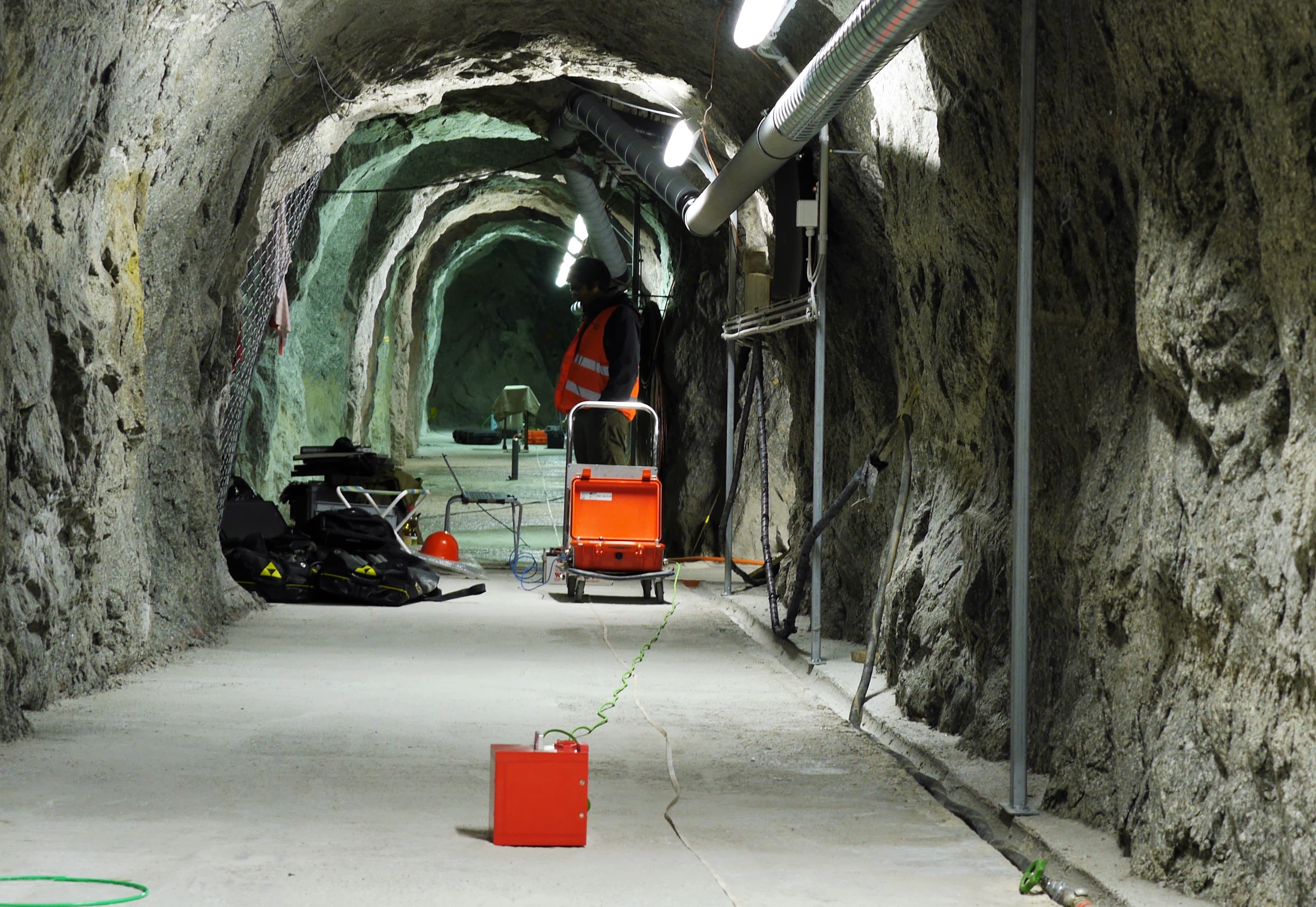
In the Deep Underground Geothermal Laboratory (DUG-Lab) at Grimsel, where an in-situ stimulation and circulation experiment is taking place to improve our understanding of permeability enhancement processes, a pioneering tracer experiment with DNA nanotracers in fracture-dominated medium was conducted. Our next tracer experiment in the DUG-Lab will include a tomographic approach with DNA nanotracers, aiming to characterize post-stimulation flow path geometries and volumes.
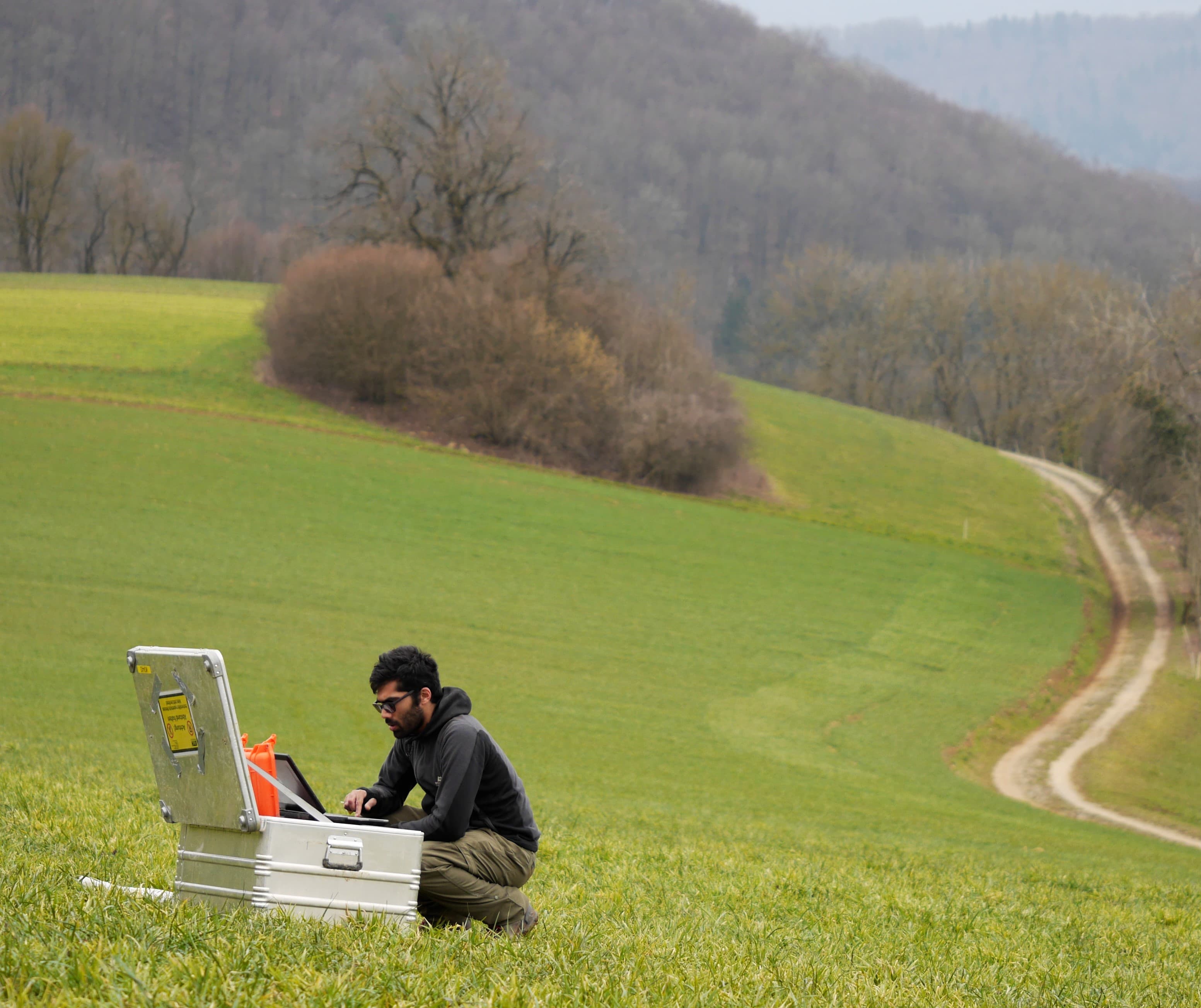
We are employing electromagnetic methods to explore for and develop geothermal reservoirs and to determine the distribution of geothermal fluids in mid-enthalpy systems such as those found in the North of Switzerland. These methods also help determine stimulation-based increases in electrical conductivity and thus permeability and heat transfer characteristics.
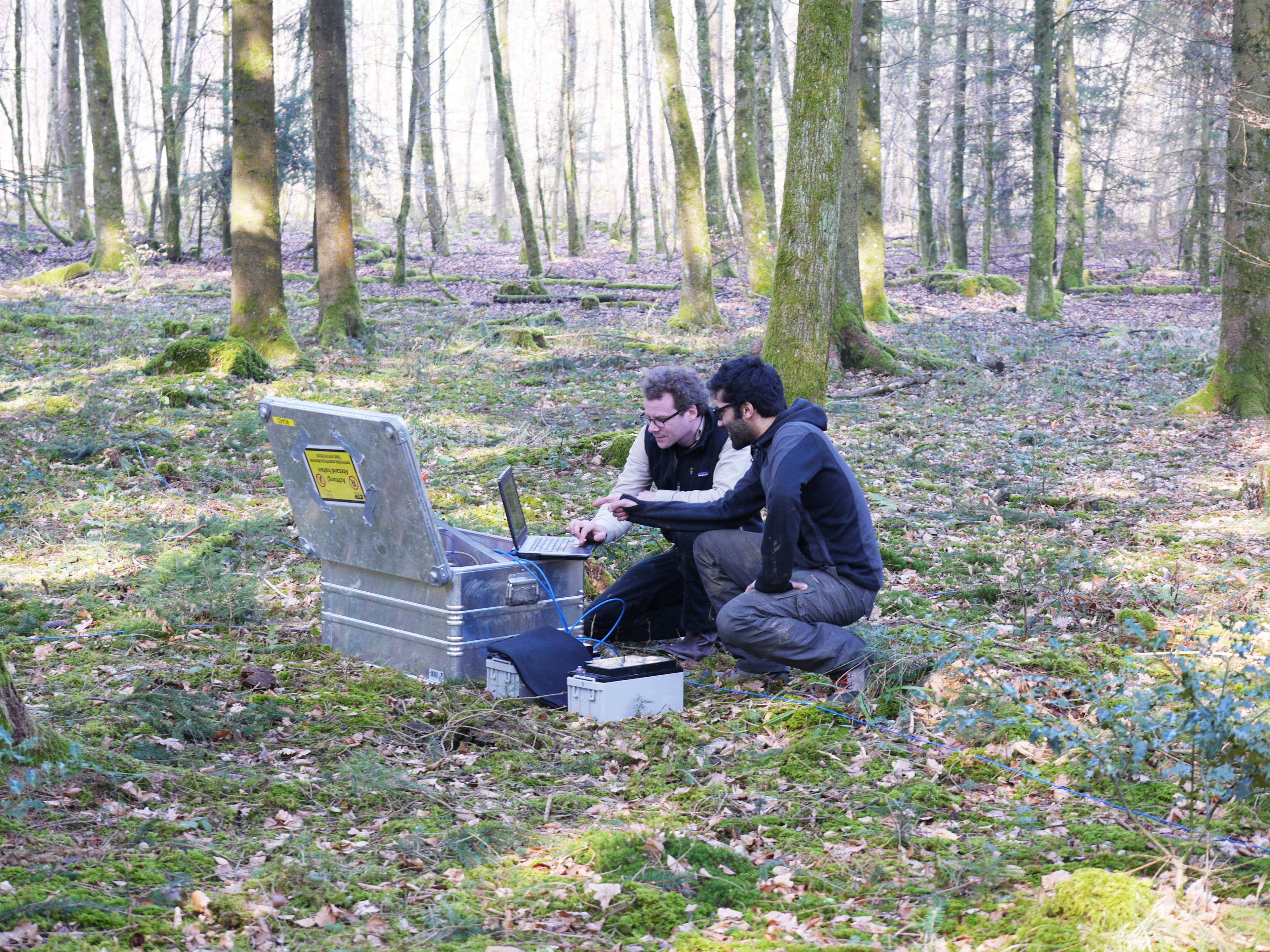
Our recent field work concerns mainly two areas: involvement with the Swiss Competence Center on Energy Research (SCCER-SoE) and its DUG-Lab at NAGRA's Grimsel Test Site for hydraulic stimulation experiments, and electromagnetic exploration and development of geothermal reservoirs across Switzerland.